The best discounts this week
Every week you can find the best discounts here.
Don Martin
MAD Magazine’s Maddest Artist
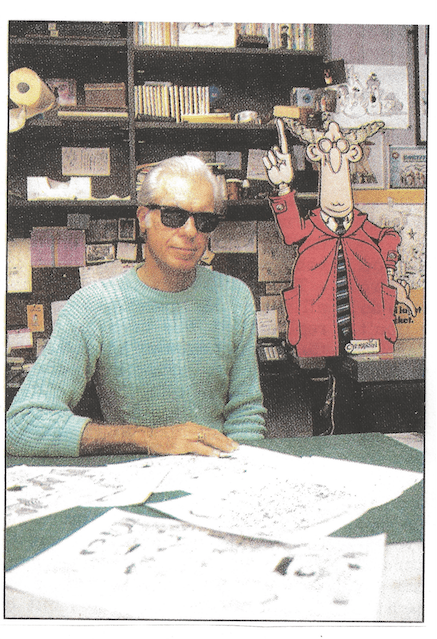

Life and Career at MAD
Born in Paterson, New Jersey, Don Martin studied art at the Newark School of Fine and Industrial Arts and the Pennsylvania Academy of the Fine Arts. Before joining MAD, he briefly worked in graphic design and even illustrated album covers for jazz artists such as Miles Davis and Stan Getz, demonstrating an initial versatility that preceded his explosion of creativity in humor.
Martin began his collaboration with MAD Magazine in 1956, shortly after the departure of some of the original artists. His tenure at the magazine spanned more than three decades, until 1988, during which he became one of the magazine’s most prominent and prolific artists. His departure from MAD was motivated by a dispute over copyright and royalties, leading him to collaborate with rival magazine Cracked for a time.
The Unmistakable Style
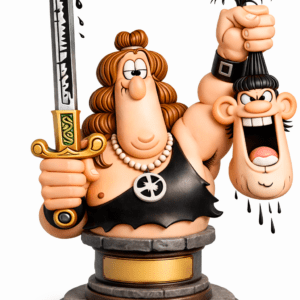
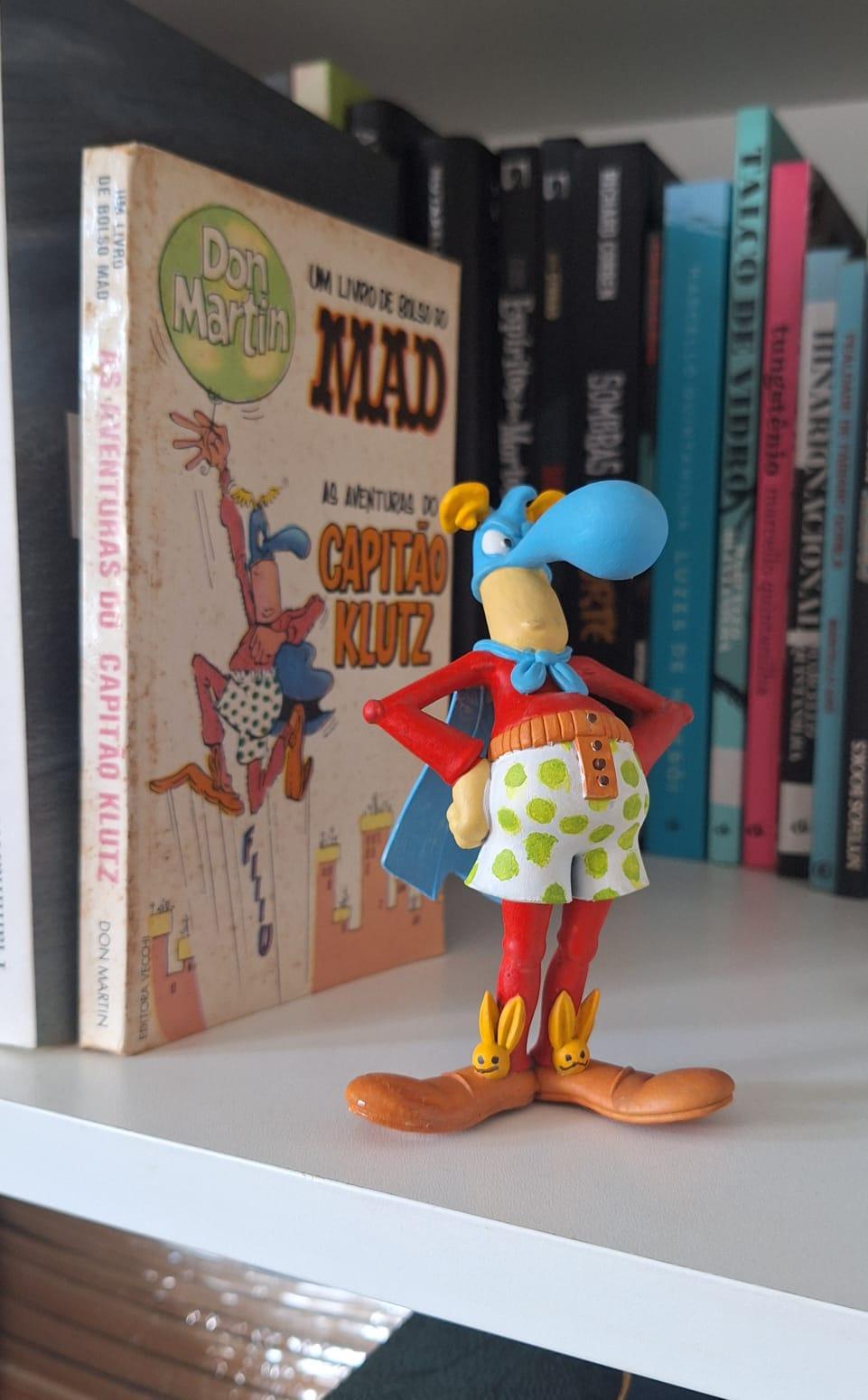
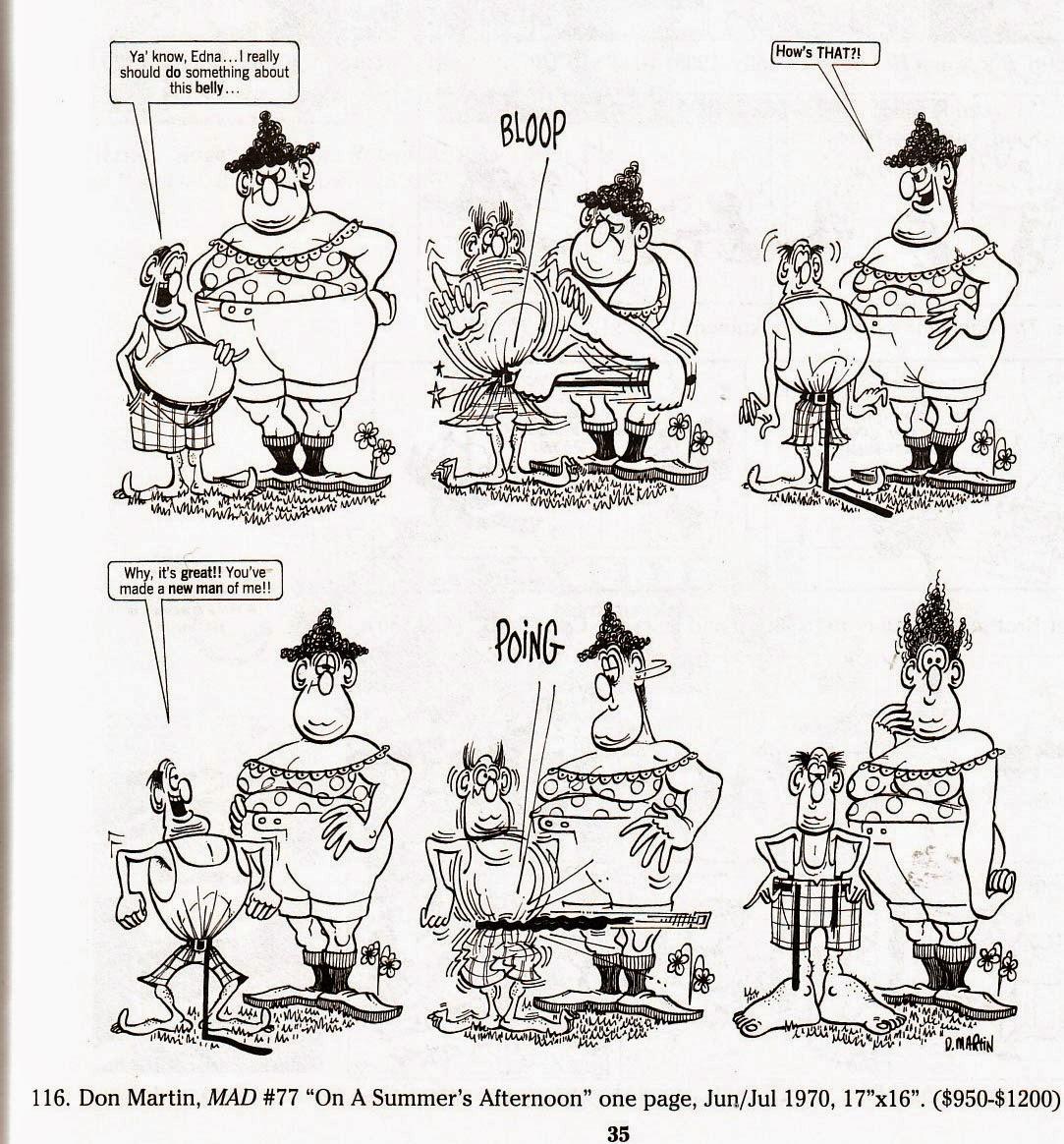
Don Martin’s style is immediately recognizable and inimitable. His characters are elongated and disproportionate figures, with bulbous noses, sleepy eyes, and bodies that appear to be made of elastic clay, ready to be squashed, stretched, or exploded. Movement is a central characteristic of his art, with characters frequently suffering exaggerated comic violence, resulting in limbs bending at impossible angles and heads flattening like pancakes.
One of the most notable trademarks is his characters’ feet, which are long and thin, with toes bending at a 90-degree angle when walking. This characteristic, combined with the deadpan expression of his characters (half-open eyes and mouth absent or in a small circle of bewilderment), created a unique visual language that was instantly recognizable.

The Universe of Onomatopoeia
More than his visual style, Don Martin is revered for his contribution to the lexicon of graphic humor: onomatopoeia. He invented a vast and bizarre collection of sound effects that brought his gags to life in a unique way. Unlike other cartoonists, Martin believed that his onomatopoeia were not arbitrary, but rather the result of an “inner logic” for each sound.
In a 1981 interview with Cartoonist Profiles magazine, Martin explained his theory: “When other people try to write a Don Martin sound effect for me, they don’t do it correctly. Most of the time they put in a bunch of arbitrary letters that don’t mean anything at all. I really think about what the sound would actually be like. For example, if somebody gets hit on the head with a crowbar, they’ll go ‘groink.’ But that’s not a crowbar landing on the head! The sound would have a clang to it, ‘pwang’ or ‘spwang.’ ‘Spwang’ would mean the skull is soft, because it has a wet sound to it. The sound wouldn’t be ‘groink.’ ‘Groink’ is when you put two fingers in someone’s nose and pull it about six inches from the front of the face.”
Some Famous Sound Effects:
| Onomatopoeia | Sound Description |
|---|---|
| SHTOINK! | The sound of something being hit or crushed. |
| PLORTCH! | The sound of a stab or piercing. |
| FAGROON klubble klubble | The sound of a building collapsing. |
| BREEDEET BREEDEET | The croaking of a frog. |
| GLIBB | The sound of a slippery object falling. |
| FWAP! | The sound of a slap or quick impact. |
Famous Characters and Stories
Although most of his strips featured anonymous characters, some recurring names became iconic and memorable to MAD readers. These characters often had absurd and rhyming names that reflected Martin’s nonsense humor:
Fester Bestertester
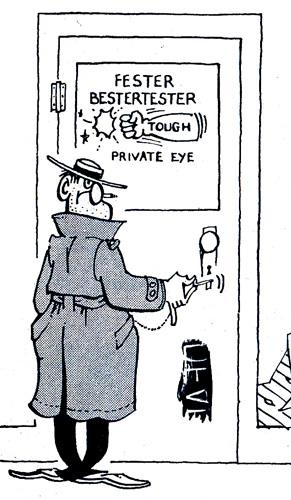
A private detective or ordinary man who frequently finds himself in absurd and dangerous situations. Fester is the naive protagonist who suffers the consequences of the crazy situations Martin created.
Fonebone (Freenbean I. Fonebone)
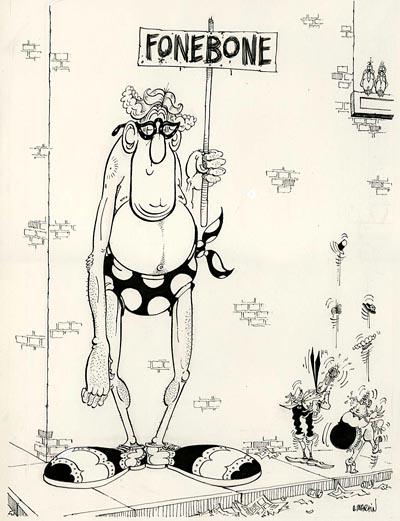
Another recurring character who often appeared in strips where he was the target of comic and violent situations. The rhyming name is typical of Martin’s style.
Karbuncle
A character with a distinctive appearance, often involved in schemes or strange situations that resulted in absurd visual humor.

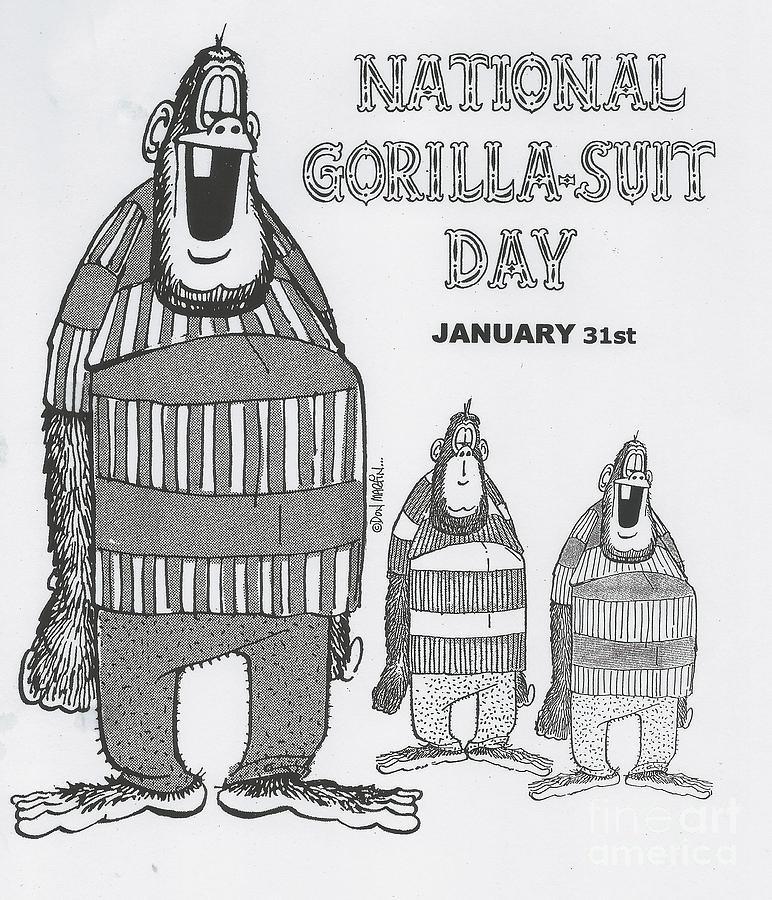
National Gorilla Suit Day
One of his most celebrated stories is “National Gorilla Suit Day,” a surreal extended narrative in which an unlucky character is repeatedly attacked by people disguised as gorillas, who in turn are disguised as ordinary people. The strip is a perfect example of the absurd humor and slapstick violence that Martin mastered, combining his unique visual art with memorable sound effects.
This story exemplifies Martin’s genius: it has no conventional plot, it doesn’t follow traditional logic, but it’s hilarious precisely because of its absurdity. The character suffers a series of increasingly ridiculous attacks, and the reader laughs not despite the lack of logic, but because of it.

Legacy and Influence
Don Martin’s legacy lies in his ability to transform the absurd into popular art. His influence can be seen in countless cartoonists and animators who came after him, from animation creators to contemporary comic artists. His onomatopoeia continue to be a symbol of the comic anarchy of MAD Magazine, and his unique visual style remains unmistakable decades after his first publications.
Martin passed away on January 6, 2000, at the age of 68, leaving a legacy that transcends MAD Magazine. He proved that visual humor could be sophisticated and completely absurd at the same time, that art could make people laugh without relying on words, and that boundless creativity was possible within the confines of a printed page. His dedication to the inner logic of each sound effect, his attention to visual detail, and his willingness to explore the absurd made him one of the most important cartoonists of the twentieth century.
Discover More
Don Martin’s complete body of work is available in various collections and compilations published over the years. If you are a fan of absurd humor, creative visual art, and the history of comic books, exploring Don Martin’s work is an essential journey.
Don Martin worked for MAD Magazine from 1956 to 1988, creating hundreds of strips that continue to entertain and inspire readers around the world.